

Most sales directors know the senior living sales cycle varies a lot by care type, and assisted living decisions usually move faster than independent living ones. When there’s an urgent care need, families move quickly. When there isn’t, the decision can take months, sometimes over a year.
You can’t create urgency that isn’t there. But you can make sure that when a family is ready, your community is the one they already know and trust. That’s the job of inbound marketing.
What inbound marketing is
Outbound marketing interrupts people: TV and radio ads, direct mail, billboards, newspaper ads, trade shows and cold calls. Inbound marketing attracts people who are already looking, with helpful blog posts, guides, videos, search visibility, social media and email.
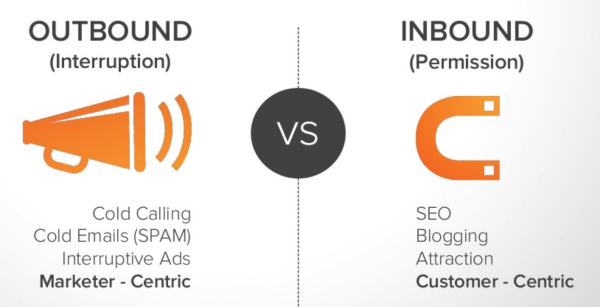
Traditional advertising still has a place, especially for awareness. But inbound tends to suit senior living well, because families do so much of their research online before they ever call. It also levels the playing field. A single community isn’t limited by the size of its budget, only by how useful its content is.
Why it shortens the sales cycle
By the time a family has read your articles, downloaded your guide and received a few helpful emails, they’ve already learned a lot from you. They arrive at the tour better informed, with fewer basic questions and more trust. That’s time your sales team doesn’t have to spend, and a head start on every other community on their list.
Step 1: Know who you’re marketing to
Start by understanding the people you’re trying to reach, and how differently they approach the decision. An independent living prospect may not have decided to move at all. An adult child whose mother just had a fall is in a very different place.
Ways to learn about them:
- Survey or interview current residents and their families.
- Listen to the questions families ask on calls and tours.
- Look at online forums and groups where adult children and seniors talk about care decisions.
- Use your website and CRM data to see what content families read before they inquire.
Turn what you learn into a few clear personas. (See How to Use Personas in Senior Living Marketing.)
Step 2: Create content for each stage of the decision
Families move through stages, and each needs different help.
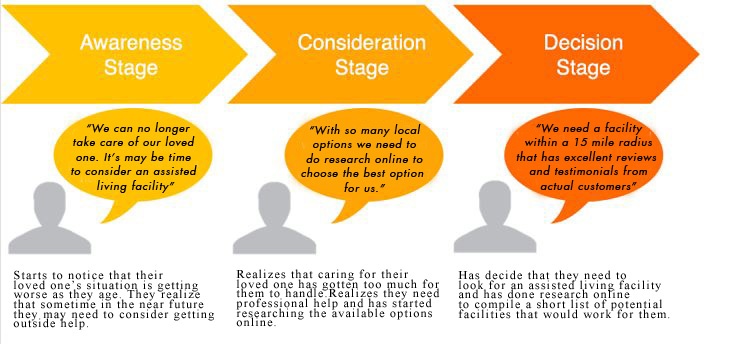
Awareness: “Something has to change”
The family is just starting to look and may not have decided on senior living. Be a helpful, neutral source of information.
- Blog posts like “How do you know when it’s time for assisted living?”
- A clear FAQ answering the most common questions about care types and costs.
- Checklists for families weighing their options.
Consideration: “What kind of community is right?”
The family has decided senior living is the answer and is comparing options. Keep educating, without being salesy.
- Guides to choosing a community and the questions to ask on a tour.
- Videos or webinars explaining care levels and pricing.
- Downloadable guides in exchange for a name and email.
Decision: “Which community?”
The family has a shortlist. Many communities put all their effort here, but if you’ve helped earlier, you’re already ahead.
- Make it easy to book a visit from every page.
- Offer a virtual tour that introduces your community and team.
- Share video testimonials from residents and families.
After move-in: keep families glad they chose you
Marketing doesn’t stop at move-in. Stay connected with families through social media, events and helpful updates. Happy families leave reviews and send referrals. (See How to Get More 5-Star Google Reviews.)
HubSpot has reported that 47% of buyers view three to five pieces of content before contacting a sales rep. Adult children in particular will often read several of your articles before they pick up the phone.
Step 3: Nurture families until they’re ready
Once a family has given you their contact details, keep the conversation going. Send helpful emails matched to their stage and persona, invite them to events, and make it easy to book a visit when the time is right.
Nurturing doesn’t replace your salespeople. It keeps your community in front of the family between calls, so that when the timing changes, they call you first. And when a family does reach out, respond quickly. A well-nurtured lead that waits a day for a callback can still go to a competitor.
Step 4: Measure it, and show leadership the results
One of the most legitimate complaints CEOs have about traditional marketing is that it’s hard to measure. You rarely know how many people saw a billboard or called because of it.
Inbound is different because nearly all of it can be tracked. With your website analytics and CRM connected, you can see which search brought a family to your site, what they read, what they downloaded, when they toured and when they moved in. That gives you the numbers leadership cares about:
- Cost per lead, cost per tour and cost per move-in, by channel.
- Which content and campaigns actually produce tours and move-ins.
- How long families take to move from first visit to move-in.
Inbound is also cost-effective and scalable. Expanding to a new care type, persona or market usually means creating new content, not buying a new media campaign. As HubSpot co-founder Brian Halligan put it, inbound is “about the size of your brain, not the width of your wallet.”
Key takeaways
- Inbound attracts families who are already looking, instead of interrupting them.
- Families who learn from you first arrive at the tour informed and trusting, which shortens the cycle.
- Build content for each stage: awareness, consideration, decision and after move-in.
- Nurture families between calls, and respond quickly when they reach out.
- Track every lead from first visit to move-in so you can prove ROI to leadership.
If you’d like help connecting your content, follow-up and reporting so you can see what’s actually producing move-ins, book a call with NextWave.
Related reading: 3 Benefits of Using HubSpot for Senior Living Companies · Stages of the Senior Living Buyer’s Journey