
Of every step in the senior living sales process, the tour is the one that most often decides whether a family moves in. By the time a family walks through your doors, your marketing and sales team has already done the hard work of reaching them, qualifying them and building trust. A forgettable tour throws that work away.
This guide covers how to prepare your community, how to understand the family before they arrive, how to run a tour they’ll remember, and the follow-up that most communities skip.
Why the tour matters so much
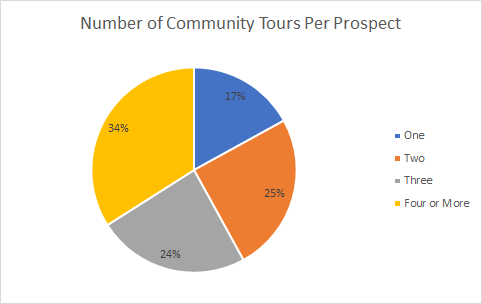
A Caring.com survey found that about 83% of prospects visited more than one senior living community before deciding: 17% toured one, 25% toured two, 24% toured three, and 34% toured four or more. Families are comparing you side by side with your competitors, often in the same week.
The same survey showed how closely tours and decisions are linked. Of the families who had toured a community in the previous six months, 40% had already moved in and another 8% were about to.
Before the tour: get the community ready
First impressions are formed before anyone says hello.
- Check housekeeping with fresh eyes. Look at common areas, corners and behind furniture. Review maintenance records and fix slow response times.
- Walk the exterior. Start where families park and enter, then check the paths they might walk afterward.
- Check staff morale. Your team is your community’s most important asset. Remind everyone how much their friendliness toward residents and visitors matters, because families notice how staff speak to residents.
- Prepare an updated folder of the information families want to take home: pricing, care levels, the activity calendar and menus.
Before the tour: understand the family
Senior living sales isn’t traditional selling. Your job is less about convincing someone they need what you have, and more about acting as a guide who helps them find the right option. That starts with listening, an approach some sales teams call “legacy learning”.
Understand where the prospect is emotionally. Many people link a move to senior living with losing control over their health, independence, finances or social life. Others welcome the change. And while amenities like a pool or great dining help, most prospects care more about having a sense of purpose and belonging.
Questions that help a prospect tell their story:
- What’s most important in your life right now?
- What did you do for a living?
- What are you proudest of?
- What makes a good day for you?
Practice active listening. Show you’ve heard them, follow up gently, and save the hard questions about health, fears and finances until you’ve built some trust. Leading with money comes across as insensitive.
Write it all down in your CRM. When the person giving the tour can see that Mom loves gardening, follows a low-sodium diet and was a teacher for 30 years, they can plan a visit around her.
During the tour: make it an experience, not a checklist
Don’t give the same walk-through every community gives. Help the family feel that they belong, and tailor the visit to what you learned.
Introduce them to a resident
A conversation with a happy resident who shares their interests is often more persuasive than anything a salesperson says. Know which residents enjoy this and are glad to talk about their experience. Family members of current residents can be just as helpful.
Share a meal
Always let prospects try the food. If they follow a particular diet, show them how your kitchen handles it.
Schedule the visit around an activity
Plan tours during an event or activity the prospect would enjoy, and invite them to join in or just watch. It shows the community’s energy better than any brochure, and it’s a natural way to meet residents.

Two mistakes that cost move-ins
The Caring.com survey also highlighted two common mistakes.
- Being too salesy. 20% of prospects who toured felt the visit was obviously just a sales pitch. Families can tell whether you care about their needs or about closing.
- Not following up. 18% of prospects said they never heard from the community again after the tour.
After the tour: follow up in a way they’ll remember
Because most families tour several communities, the days after the tour are your best chance to stand out, and most salespeople miss it.
- Follow up within a day, by phone and with a short personal email or text.
- Show you were listening: refer back to the details they shared and their goals.
- Send something specific they asked about, such as the garden club schedule, a floor plan or a menu.
- Agree on a clear next step, whether that’s a second visit, a meal with residents or a meeting with the nurse.
Missed follow-up is usually a process problem, not a people problem. Tasks and reminders in your CRM make sure every toured family hears from you. (See How to Choose the Best CRM for Senior Living.)
Key takeaways
- Most families tour several communities, so the tour is where you win or lose them.
- Get the building, the grounds and the team ready before families arrive.
- Learn the prospect’s story first, and record it in your CRM.
- Tailor the visit: introduce a resident, share a meal, and time it around an activity.
- Don’t be salesy, and always follow up personally after the tour.
If you’d like help building a follow-up process that makes sure no toured family goes quiet, book a call with NextWave.
Related reading: How Speed-to-Lead Became the Easiest Unfair Advantage in Senior Living · How to Use Personas in Senior Living Marketing