

A family fills out your inquiry form on a Tuesday night. They’re worried about Mom, and they’ve just sent the same form to four other communities. Whoever calls back first, with a real, helpful person on the line, usually gets the tour.
Most communities aren’t first. The average senior living community takes 46 hours to make its first contact attempt with a new lead. We know because we secret-shopped over 150 communities across the country, and that number keeps showing up. Even worse, 30% of the communities we shopped never responded at all.
Meanwhile, research shows your odds of qualifying a phone lead drop by 80% after just five minutes. Not five hours. Five minutes. That gap is an opportunity for any operator willing to close it.
What speed-to-lead measures
Speed-to-lead is the time between a prospect’s inquiry and your team’s first contact. The clock starts the moment the form is submitted or the phone rings.
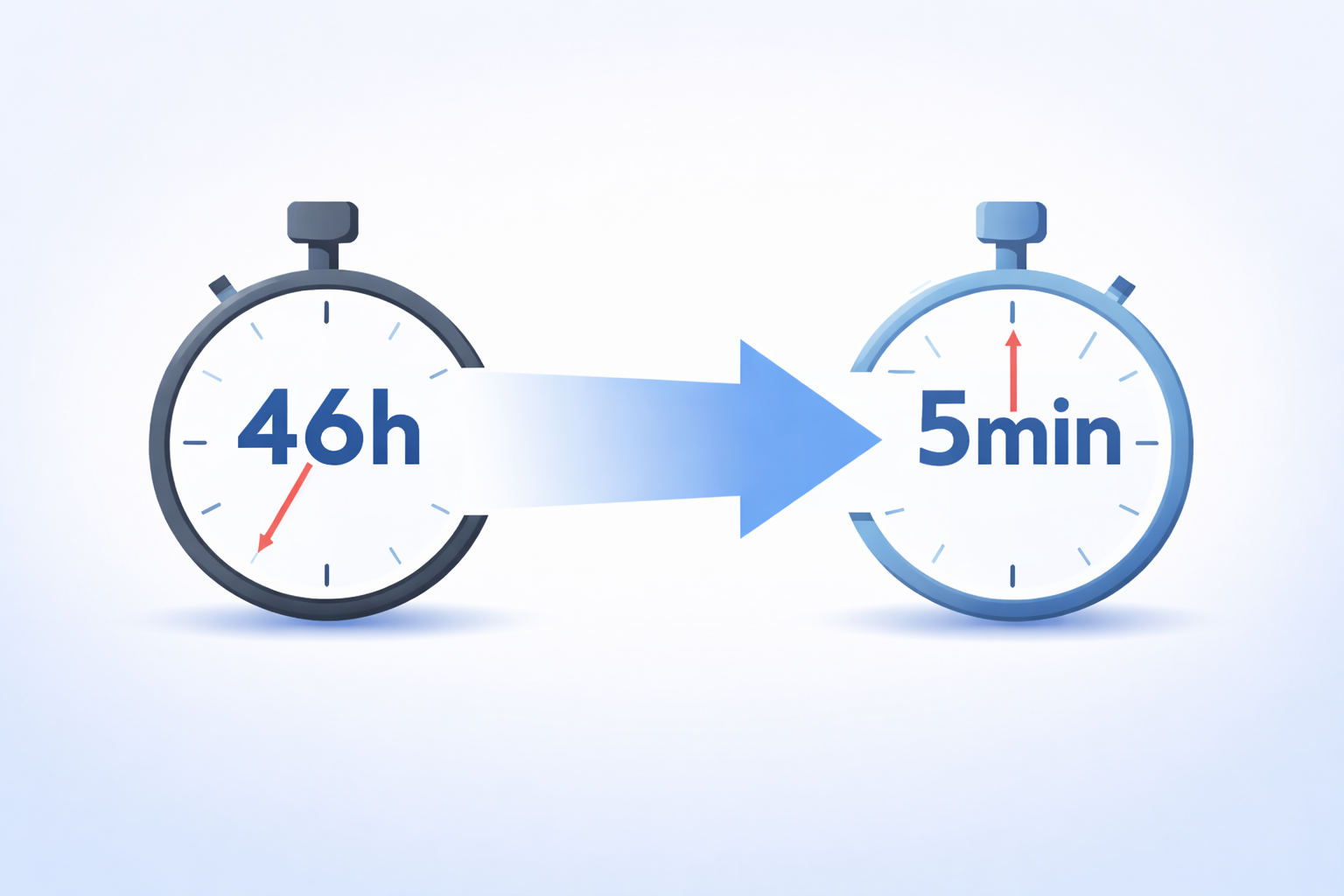
It matters more in senior living than in most industries because families research several communities at once, usually three to five. They’re comparing options and they’re stressed about a major decision for themselves or a loved one. The first community to respond with helpful, human contact wins the conversation.
The data behind slow response times
Most communities respond in days, not minutes
Across the 150 communities we shopped, average response time was 46 hours: nearly two full business days of silence. According to McKnight’s Senior Living, 39% of senior care marketers wait more than 12 hours to respond to a single lead, and about half fall in the one-to-three-hour range. By the time most communities call, the family has toured a competitor, decided, or moved on.

What to do: Aim for first contact within five minutes. If you can’t staff for that internally, use automation or an outside partner.
Response speed drives conversion
Studies show leads contacted within five minutes are 100 times more likely to convert than those contacted after 30 minutes, and even a 15-minute delay sharply reduces your chances of booking a tour. An older MIT study showed the same pattern: leads answered within the first minute converted almost 4x better, the odds fell by more than half after one more minute, and conversion dropped below 17% after 24 hours.
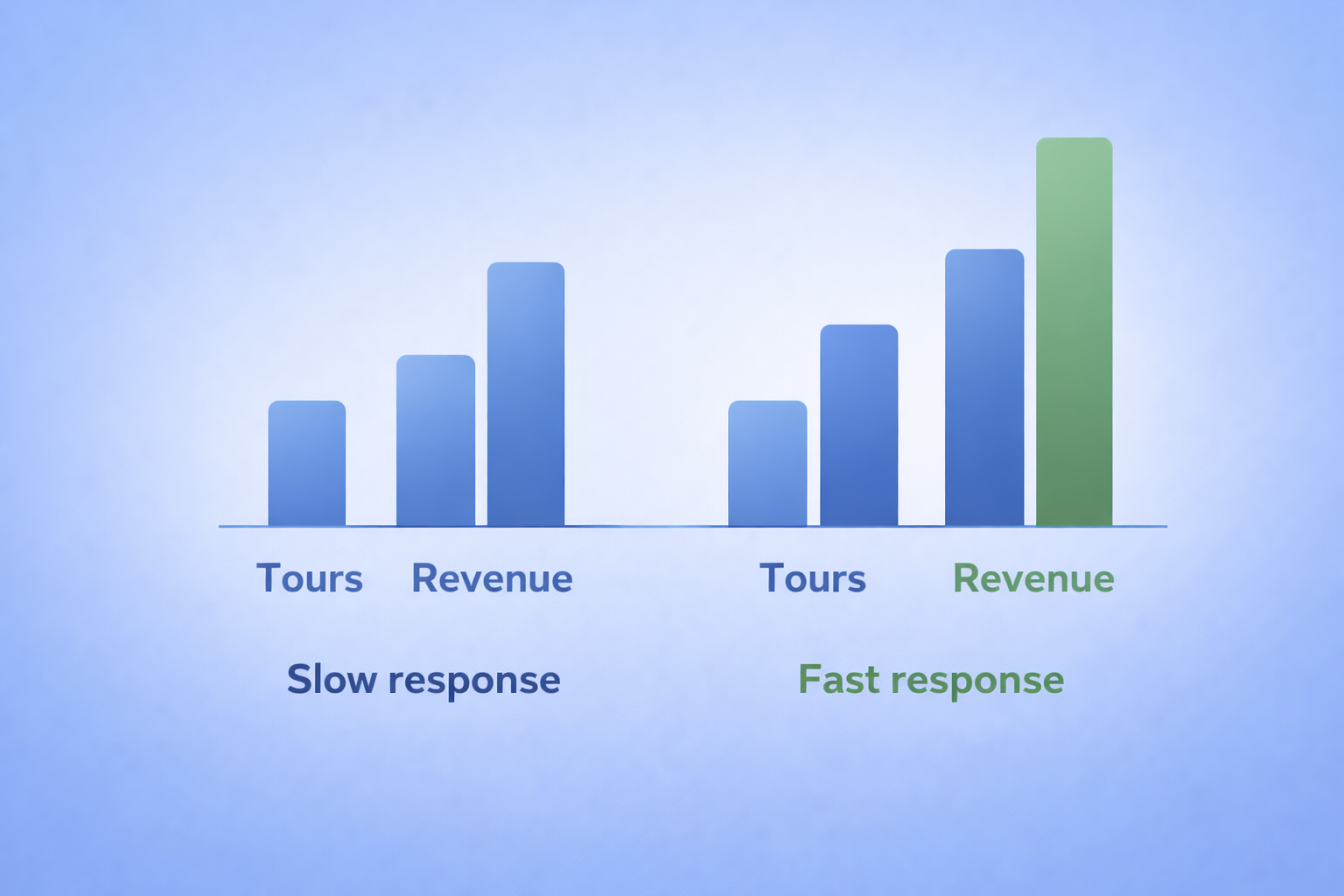
Our clients see a 48% increase in lead-to-tour conversion when we put rapid response systems in place. The leads didn’t get better. Every lead just got contacted while the family was still thinking about senior living.
What to do: Track your actual response times. Most communities don’t know this number, and you can’t improve what you don’t measure.
Referral leads need an immediate response
A lead from A Place for Mom or Caring.com goes to several communities at the same moment. You’re paying $400 or more for it, and so is every competitor who received it. First to respond gets the conversation. (See How to Respond First to A Place for Mom Leads.)
What to do: Route referral leads to a dedicated responder or service that guarantees immediate contact.
After-hours inquiries get ignored
More than 22% of senior living inquiries come in after hours or on weekends. Most aren’t contacted until the next business day, leaving a motivated family waiting 24 to 48 hours while competitors with weekend coverage reach them first.
What to do: Cover after-hours with automation, a call center or a rotating on-call schedule. Even an automated text with next steps keeps the family engaged.
The “bad leads” problem is really a follow-up problem
We hear it from sales directors all the time: the internet leads are junk, they never convert. The data says otherwise.
Across thousands of leads at dozens of communities, the average prospect needs 9 touchpoints (calls, emails, texts) before they’re ready to schedule a tour. The average number of follow-up attempts most communities make? Fewer than two. One call, one email, maybe another try the next day, and the lead gets labeled “bad.”
A slow first response is usually a symptom of a bigger problem: no system for lead management. If nobody owns the first five minutes, nobody owns the next nine touches either. Families are dealing with a stressful decision and won’t act after one call. They need repeated, helpful contact over time, and the communities that win build systems to deliver it automatically.
Why slow response happens
Speed-to-lead isn’t slow because sales directors are lazy. The job makes fast response nearly impossible without a system.
- Sales directors are busy giving tours. The person who calls new leads is also running tours, meeting families and handling move-ins. A 10am lead may wait until 3pm, by which time two competitors have called.
- Leads go to the wrong place. Web forms land in a general inbox checked once or twice a day. Phone inquiries reach a front desk that takes a message.
- Nobody owns after-hours. A 6pm Friday lead isn’t touched until Monday: 60+ hours of silence. Usually nobody decided against weekend coverage; the question was simply never assigned.
- Nobody measures it. Most operators can’t tell you their average speed-to-lead. Without measurement there’s no accountability.
How to respond faster: process plus tools
Have a response process and stick to it
Map out ahead of time what happens when a lead arrives, with different plans for website, referral and event leads. Decide how you’ll ask for the tour (phone, text or email) and what you’ll ask to qualify the family first.
Know the questions, and the answers
The same questions come up again and again: cost, amenities, care services, transportation, meals and visiting. The best sales directors keep a cheat sheet at their desk so they can answer and qualify on the spot. Don’t let a missing answer send a family to another community.
Let technology handle the first touch
- Instant email or text replies confirm the inquiry was received, can ask a qualifying question or two, and can enroll the family in a follow-up sequence.
- CRM alerts and automated tasks notify the right salesperson the moment a lead arrives and schedule every follow-up so nothing depends on memory. (See How to Choose the Best CRM for Senior Living and How to Use Senior Living Task Automation to Respond to Leads Faster.)
- Live chat and chatbots start the conversation while the family is still on your website, instead of after they’ve left. A Drift survey found only 14% of the 433 companies surveyed had live chat enabled, so it’s still a chance to get ahead. (See Top 4 Benefits of Using Chatbots for Senior Living.)
- Social messaging auto-replies make sure messages on your Facebook page get an instant response, even when nobody is watching the inbox.
As Lead Connect put it: “78% of customers buy from the first responder.”
The financial case for fixing this
The cost of non-response
Take a community buying 50 leads a month at $400 each: $20,000 in monthly lead spend. If 30% never get a response, that’s $6,000 a month, or $72,000 a year, with zero chance of conversion. It never shows up as a line item. It looks like marketing that didn’t work, but it’s an operations problem.
The cost of slow response
Communities that improve speed-to-lead from 46 hours to under 30 minutes typically see lead-to-tour conversion rise by 40–50%. Same leads, same marketing spend, more tours. For a 100-unit community with average monthly rent of $5,000, each additional move-in is $60,000 in annual revenue. Two extra move-ins a year is $120,000.
Portfolio-level impact
For multi-community operators and private equity groups, lead response time is a portfolio-wide performance indicator. If the average is 46 hours and 30% of leads go unanswered, it’s costing occupancy points at every property. The communities complaining about lead quality probably have response-time problems. Fixing it is one of the few operational changes you can roll out quickly across properties with standard processes and central accountability, and it flows straight to occupancy, NOI and valuation.
Why this works
Most operational improvements in senior living need capital, new staff or months of work. Speed-to-lead doesn’t. The bar is so low that responding within 30 minutes puts you ahead of most competitors, and responding within five makes you stand out. You don’t need better leads, a bigger budget or a renovation. You need to answer faster. Communities that do generate 3x more tours from the same lead flow.
Key takeaways
- The industry average response time is 46 hours; 30 minutes puts you ahead of most competitors.
- Leads contacted within 5 minutes convert at dramatically higher rates.
- “Bad leads” usually means incomplete follow-up: about 9 touchpoints to a tour, fewer than 2 attempts made.
- Slow response is an operational problem; give someone (or a system) clear ownership.
- For a community spending $20,000/month on leads, 30% non-response is $72,000/year wasted.
- Referral leads go to several communities at once; first to respond wins.
- After-hours and weekend inquiries are more than 20% of your leads.
Next steps
If you don’t know your speed-to-lead, start measuring it: submit a test inquiry and time the response. Then ask whether your process can reach every lead within five minutes. If not, something needs to change, whether that’s automation, dedicated staff or a partner.
NextWave helps senior living communities respond faster through the Occupancy Advantage System™. Our clients see 91% faster speed-to-lead and 48% higher lead-to-tour conversion. Schedule a conversation to see how it would work for your communities.
Free guide: Ultimate Guide to Senior Living Lead Response