

A call coaching framework for senior living sales is the set of call behaviors a sales leader trains reps on, reviews and scores them against.
The right framework teaches reps to understand a family’s situation before asking for anything, starting with the resident’s care needs. In NextWave’s analysis of its own sales call data, reps doubled their tour booking rate when they steered the conversation to care needs first and talked price later in the conversation.
That result runs against how a lot of sales teams are coached. Many frameworks reward speed. They push reps to answer the question, ask for the tour and move on. In senior living, the family on the phone is often making one of the hardest decisions of their lives. A framework that pushes too early books fewer tours and loses families who might have moved in later.
This guide is for sales directors and operators choosing or rebuilding a call coaching framework. It covers what the framework should include, why slowing reps down works, what to set up first, how to build the framework step by step, and the mistakes to avoid.
What Is a Call Coaching Framework for Senior Living Sales?
A call coaching framework for senior living sales defines what a good call looks like, the order a rep should cover topics in, and how a manager scores calls during review. The framework is what turns individual call reviews into consistent behavior across a team, or across a portfolio of communities.
For senior living, the framework has to handle a specific problem. Families call at very different stages. Some are reacting to a fall or a hospital discharge and need help this month. Others are gathering information for a decision that’s a year away. A framework that treats every caller as ready to tour will push the second group too hard. A framework that teaches reps to find out first works for both groups.
Why Does a Slower Call Coaching Framework Work in Senior Living Sales?
A slower call coaching framework works in senior living sales because the behaviors it coaches are the ones linked with tours and move-ins in NextWave’s call data.
- When pricing came up in the first minute, families were much less likely to book a tour. When reps steered to care needs first and talked price after two or three minutes, the tour booking rate roughly doubled.
- When families discussed the daily care needs of the person moving in, the odds of a move-in rose by about 48%.
- An 8-minute first call had a 22% higher chance of a move-in than a 4-minute first call.
- When a family had more than one connected conversation with a rep, the chances of a move-in rose by 40%.
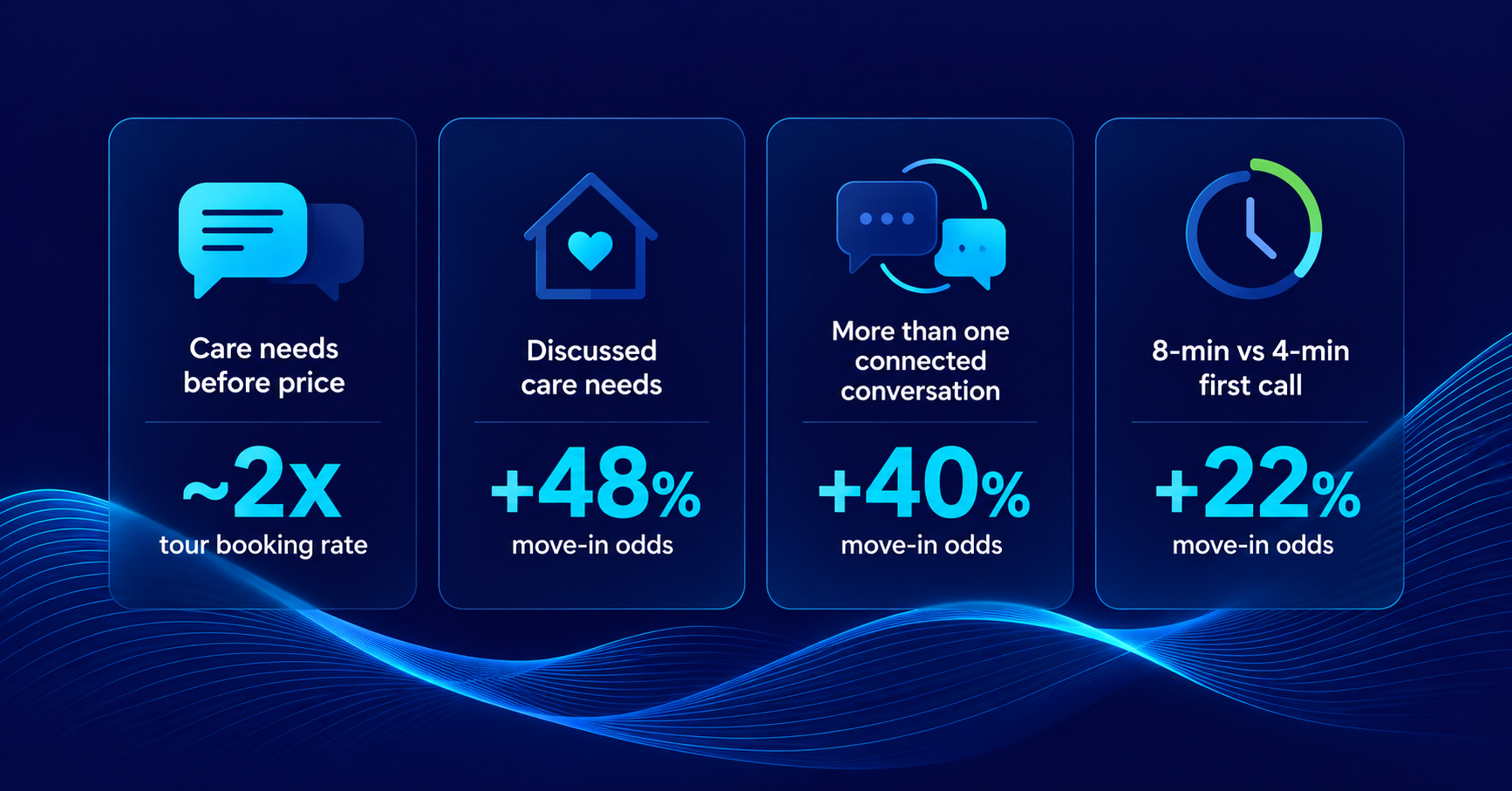
A rep who opens the care needs conversation gives the family room to show how invested they are, and building that trust before the price question leads to more tours.
The wider industry points the same way.
Senior Housing News reports that prospective residents often want to take their time and don’t want to feel pressured into a move. It describes how LifeStar Living’s sales staff ask questions and listen to what prospects want and need instead of simply informing them. A McKnight’s Senior Living report on Bild & Co.’s mystery shopping of more than 250 senior living communities found weak relationship-building among the common sales gaps.
What Has to Be in Place Before You Roll Out a Senior Living Call Coaching Framework?
A senior living call coaching framework only works if three things are already in place.
Managers need a way to hear real calls, through recordings or regular live call reviews. Coaching from a rep’s summary of a call misses the moment price came up and how the rep handled it.
Your metrics can’t punish longer calls. If reps are measured on calls per hour or average handle time, a framework that asks them to slow down will lose every time. Check what your dashboards reward before you change what you coach.
Every manager needs to mean the same thing by phrases like “care needs discussed” or “price raised early.” Without agreed definitions, scores won’t compare across reps or communities.
How to Choose and Build a Senior Living Call Coaching Framework, Step by Step
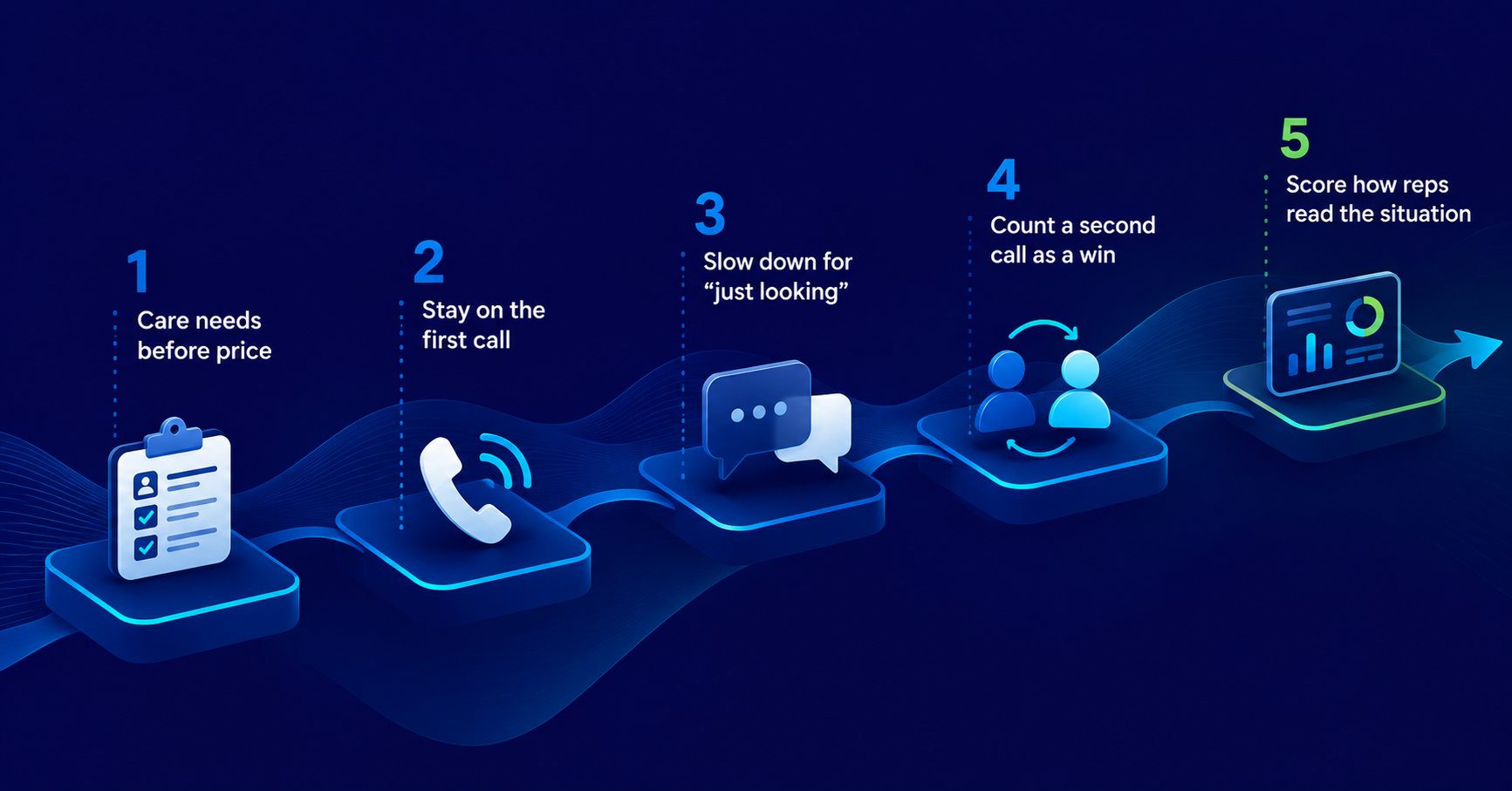
Step 1: Put Care Needs Before Price in the Senior Living Call Order
The first rule in a senior living call coaching framework should be the order of the conversation. Care needs come first, and price comes second. Reps shouldn’t dodge the price question. They should acknowledge it and move it. NextWave reps respond to an early price request with a line like this one. “Yes, we’ll get to that, but first let me understand more about the care needs of the potential resident, and then we can talk about pricing.”
When you choose a framework, check whether it sets a topic order at all. Many generic sales frameworks don’t.
Step 2: Coach Senior Living Reps to Stay on the First Call Long Enough to Understand the Situation
A senior living call coaching framework should treat a rushed first call as a coaching issue. Longer first calls usually reflect a rep who is trying to understand the family’s situation and is willing to listen. For many families, this is the first call they’ve ever made about senior living, and it carries a lot of emotional weight.
A longer call also partly reflects a family with more to say, so don’t set a minimum call length. Coach the behaviors that make room for a longer call, like open questions about the resident’s day and pausing after the family answers. Then check whether call length moves with them.
Step 3: Give Senior Living Reps Permission to Slow Down When a Family Says “Just Looking”
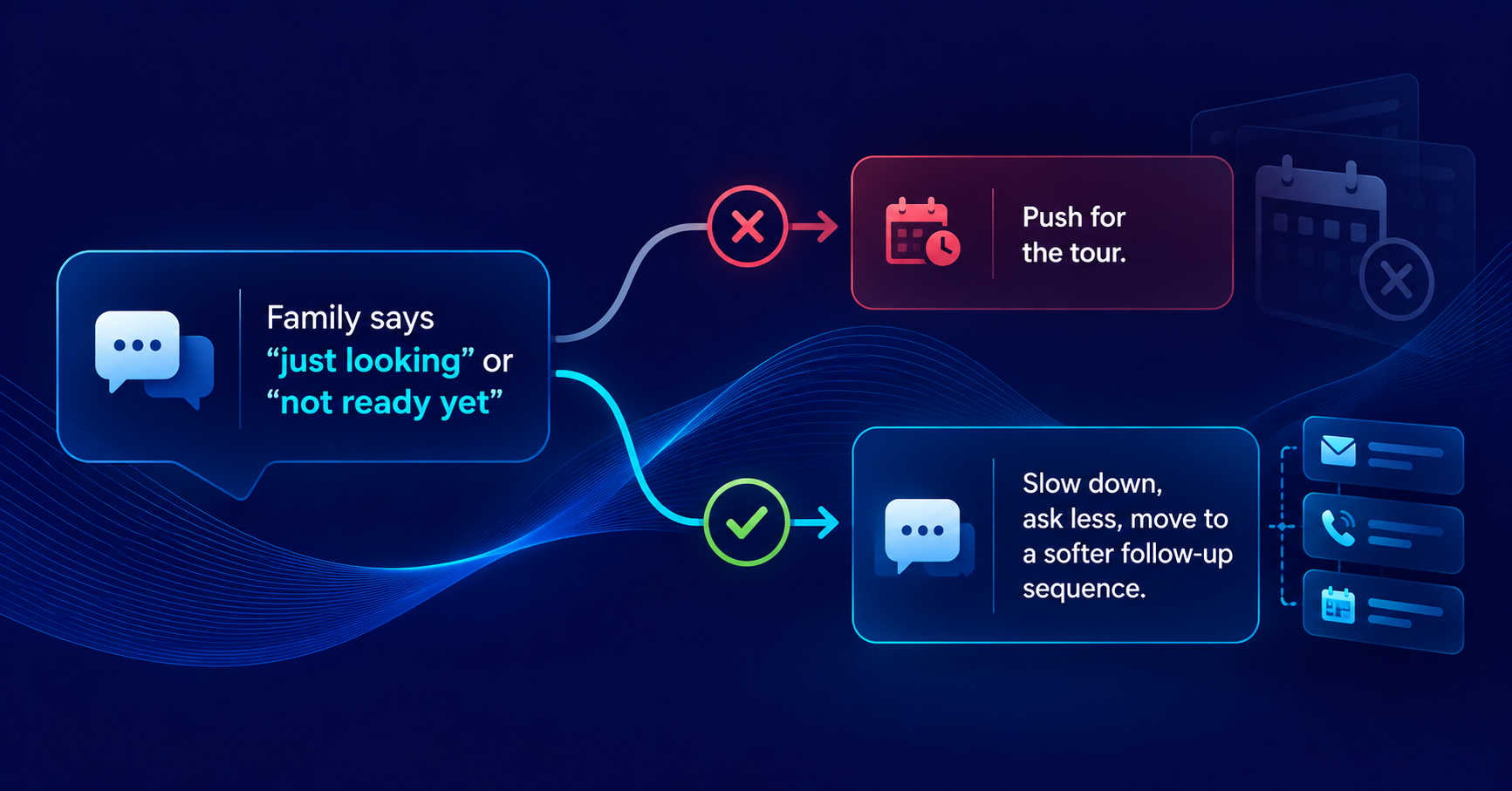
A senior living call coaching framework needs an explicit rule for families who say they’re “just looking” or “not ready yet.” In NextWave’s call data, phrases like these were linked with move-in odds between 28% and 72% lower. Families often use them to say they don’t want to be pushed into something they aren’t ready for.
The right response is to slow the call down, ask less, and move the family to a softer follow-up sequence. A family that isn’t ready now may be ready later. A framework without this rule leaves reps to treat “not ready” as an objection to overcome, and that’s exactly when pushing does the most damage.
Step 4: Count a Second Connected Conversation as a Win in Senior Living Call Coaching
A senior living call coaching framework should score a planned second call as a good outcome. Families with more than one connected conversation were 40% more likely to move in. Those families often have more information to gather than one phone call can hold, and needing a second or third call is a sign they’re invested.
If your framework scores every first call on “tour booked, yes or no,” reps will push for the tour on calls that should have ended with a scheduled callback.
Step 5: Score Senior Living Reps on How Well They Read the Situation
The last piece of a senior living call coaching framework is what reps get scored on. Life circumstances drive more call outcomes than sales skill does. If cost comes up in the first 20 seconds, there may be nothing the rep can do to turn that call into a tour. Skill shows up in recognizing the situation, giving the family what they need, and moving efficiently to the next call.
Build your scorecard around three questions.
- Did the rep cover care needs before price?
- Did the rep recognize a “not ready” family and adjust?
- Did the call end with a clear next step, whether that’s a tour, a second call or a softer follow-up?
Common Mistakes When Choosing a Senior Living Call Coaching Framework
The most common mistake is choosing a framework built around closing on the first call. Frameworks borrowed from other industries often measure success by how fast a rep gets to the ask. In senior living, that coaches the exact behavior that loses families.
Rewarding call volume over call quality is the second. If reps are praised for short handle times, they’ll cut the care needs conversation first.
Some teams script so tightly that reps can’t follow the family. A topic order works. A word-for-word script tends to break the first time a caller brings up a recent fall or a spouse’s death.
The last is coaching only from move-in results. Move-ins depend heavily on what’s happening in the family’s life. Coach the behaviors on the call, and let the outcomes show up over a quarter.
Real Example: What NextWave Coaches Its Own Reps to Do on First Senior Living Sales Calls
NextWave’s reps handle first calls and follow-up for senior living communities, and their coaching follows the steps above. Reps acknowledge pricing questions and hold them until after the care needs conversation. Reps who hear “just looking” or “not ready yet” slow down and move the family to a softer follow-up sequence. A call that ends with a second conversation on the calendar counts as progress.
NextWave keeps building the care-needs-first approach into its agent training because of the data behind it. Tour booking roughly doubles when care needs come first, and first calls that run longer and cover care needs are linked with more move-ins.
Frequently Asked Questions
What should a senior living call coaching framework include?
A senior living call coaching framework should include a set topic order with care needs before price, a rule for families who say they’re “just looking,” and a scorecard that counts a scheduled second call as progress. In NextWave’s call data, putting care needs before price roughly doubled the tour booking rate. The framework should be reviewed against recorded calls, not rep summaries.
Should senior living sales reps give the price when a caller asks for it right away?
Senior living sales reps should acknowledge a price request right away and come back to it after asking about the resident’s care needs. In NextWave’s call data, families were much less likely to book a tour when price came up in the first minute. When reps covered care needs first and discussed price two or three minutes in, the tour booking rate roughly doubled.
How long should a first senior living sales call last?
There’s no fixed target length for a first senior living sales call, but longer first calls were linked with more move-ins in NextWave’s data. An 8-minute first call had a 22% higher chance of a move-in than a 4-minute first call. Coach the behaviors that lead to longer calls, like asking about care needs, rather than setting a minimum time.
How do you stop senior living sales reps from pushing prospects too early?
You stop senior living sales reps from pushing prospects too early by changing what you coach and score. Give reps an explicit rule to slow down when a family says “just looking” or “not ready yet,” count a second connected conversation as a win, and remove metrics that reward short calls. In NextWave’s data, families with more than one connected conversation were 40% more likely to move in.
Alan Duro, Partner & COO, NextWave
Want to compare your current call coaching approach with what NextWave sees across its call data? Book a call with the NextWave team. No pressure, just a conversation about your calls.