
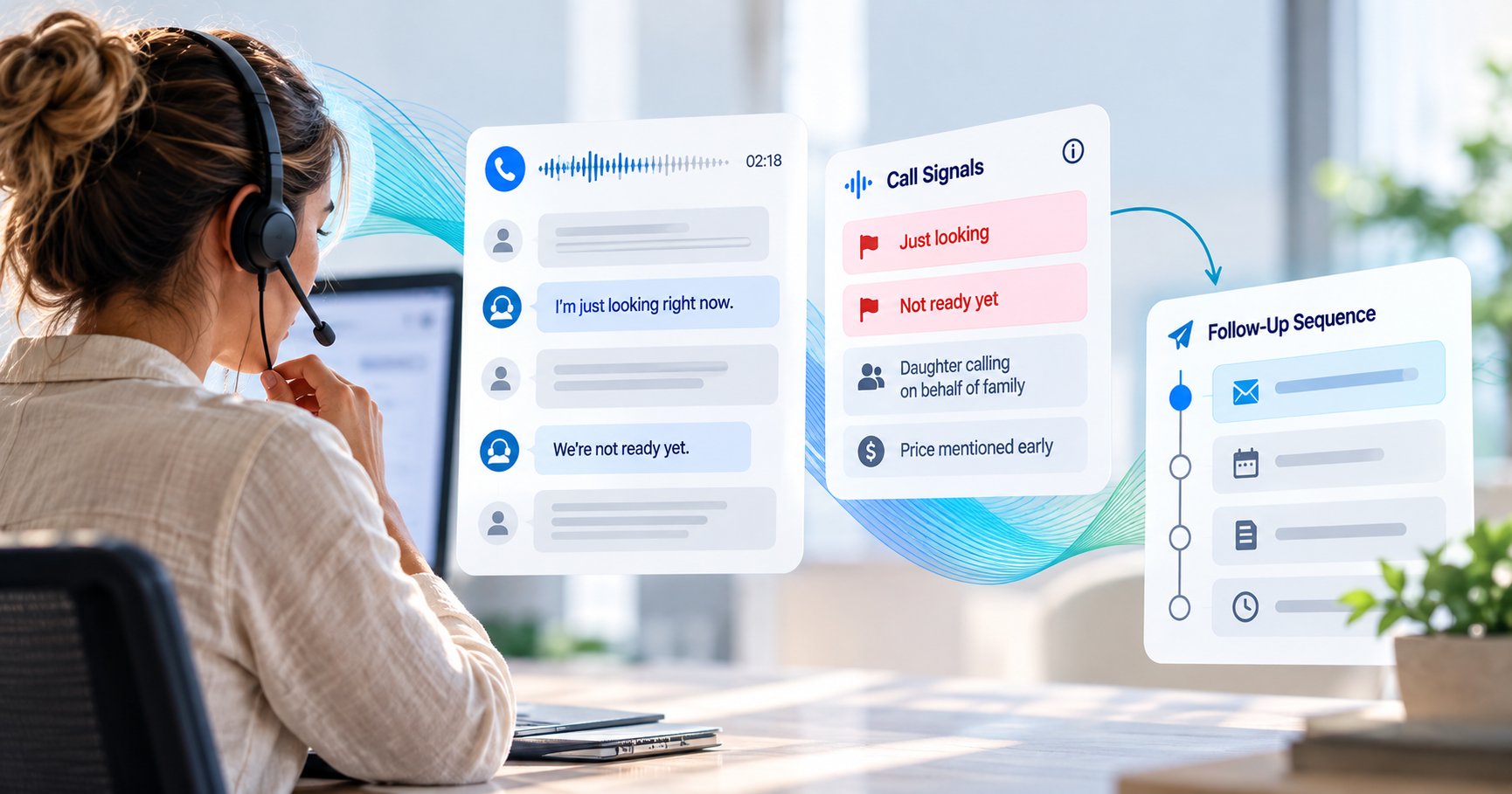
Negative call signals in senior living sales are things a prospective resident or their family says on a phone call that make a near-term move-in less likely.
In NextWave’s analysis of its own sales call data, three phrases stood out.
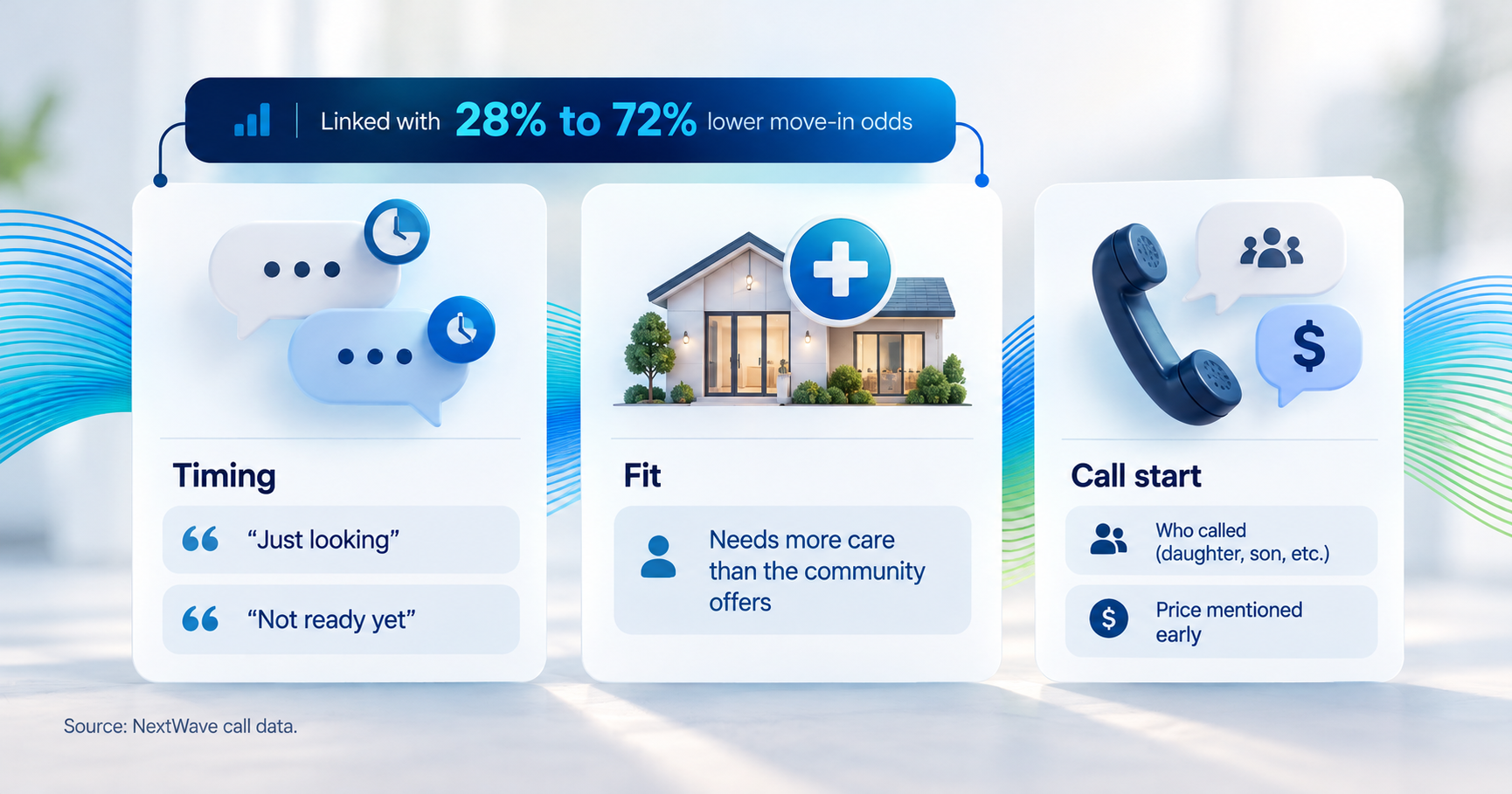
The family says they’re “just looking,” the family says they’re “not ready yet,” or the family says the person needs more care than the community provides. Each was linked with move-in odds between 28% and 72% lower.
Who’s on the phone matters too.
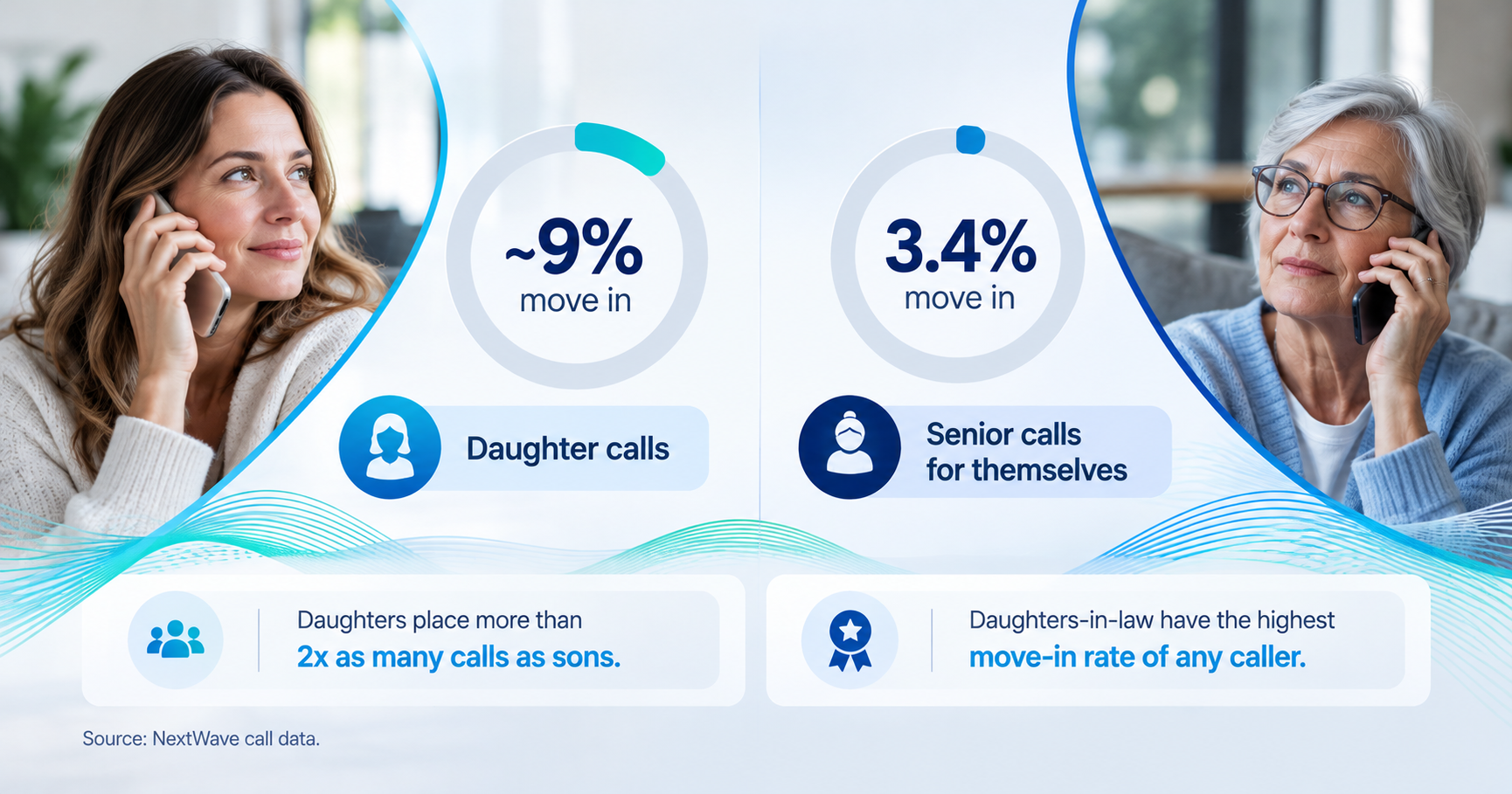
When a daughter called on behalf of the family, the family moved in about 9% of the time. When a senior called for themselves, the move-in rate was 3.4%.
These signals matter to sales directors and operators for two reasons.
- Reps only have so many hours in a day, so knowing which calls are less likely to turn into a move-in helps them spend that time where it counts.
- The same signals also tell a rep when to ease off, because pushing a family that just said they’re not ready risks losing them for good.
This guide covers what the negative signals are, why they matter, what to set up before you track them, how to act on them step by step, and the mistakes that cost communities future move-ins.
What Are Negative Call Signals in Senior Living Sales?
Negative call signals in senior living sales are moments on a first or follow-up call that point to a lower chance of a move-in in the near term. NextWave’s call data points to three main types.
- Timing signals are what the family says about when, like “we’re just looking” and “we’re not ready yet.”
- Fit signals are what the family says about the match, most often that the person needs more care than the community offers.
- Call-start signals are about how the call opens, including who placed the call and how early price comes up.
A negative signal doesn’t mean the lead is dead. Timing and fit phrases are often a family protecting itself. Saying “not ready yet” gets the family ahead of an uncomfortable conversation, and it tells the rep they don’t want to be pushed into something they aren’t ready to do.
Why Do Negative Call Signals Matter for Senior Living Sales Teams?
Negative call signals matter for senior living sales teams because they change what a good call looks like. NextWave’s data on caller type shows the gap.
A family moved in about 9% of the time when a daughter called on its behalf, and 3.4% of the time when a senior called for themselves. A senior calling for themselves is often early in the process, gathering information and hoping to put the move off as long as possible. When a daughter, son or daughter-in-law calls, it’s usually because the family has decided something needs to happen.
Price is the second early warning. In NextWave’s data, families were much less likely to book a tour when pricing came up in the first minute of the call.
Outside research points the same way.
Senior Housing News describes “I’m not ready” as a common refrain on the senior living sales journey. It reports that the hesitation often comes from older adults not knowing exactly what senior living involves or why they’d need it.
A survey by the research firm A Closer Look, reported in McKnight’s Senior Living, found that 88% of respondents had reservations about becoming a resident, and more than 91% named cost as a major concern.
Life circumstances drive most outcomes on these calls, and that’s where rep skill actually shows up. If cost comes up in the first 20 seconds, there may be nothing a rep can do to turn a price-shopping call into a tour. A skilled rep recognizes that situation, gives the family what it needs, and moves on to the next call, where the outcome may be different.
What Has to Be in Place Before a Senior Living Sales Team Can Track Negative Call Signals?
A senior living sales team needs three things in place before it can track negative call signals reliably.
- Every new lead gets a first call. None of these signals exist in your data until someone has talked to the family.
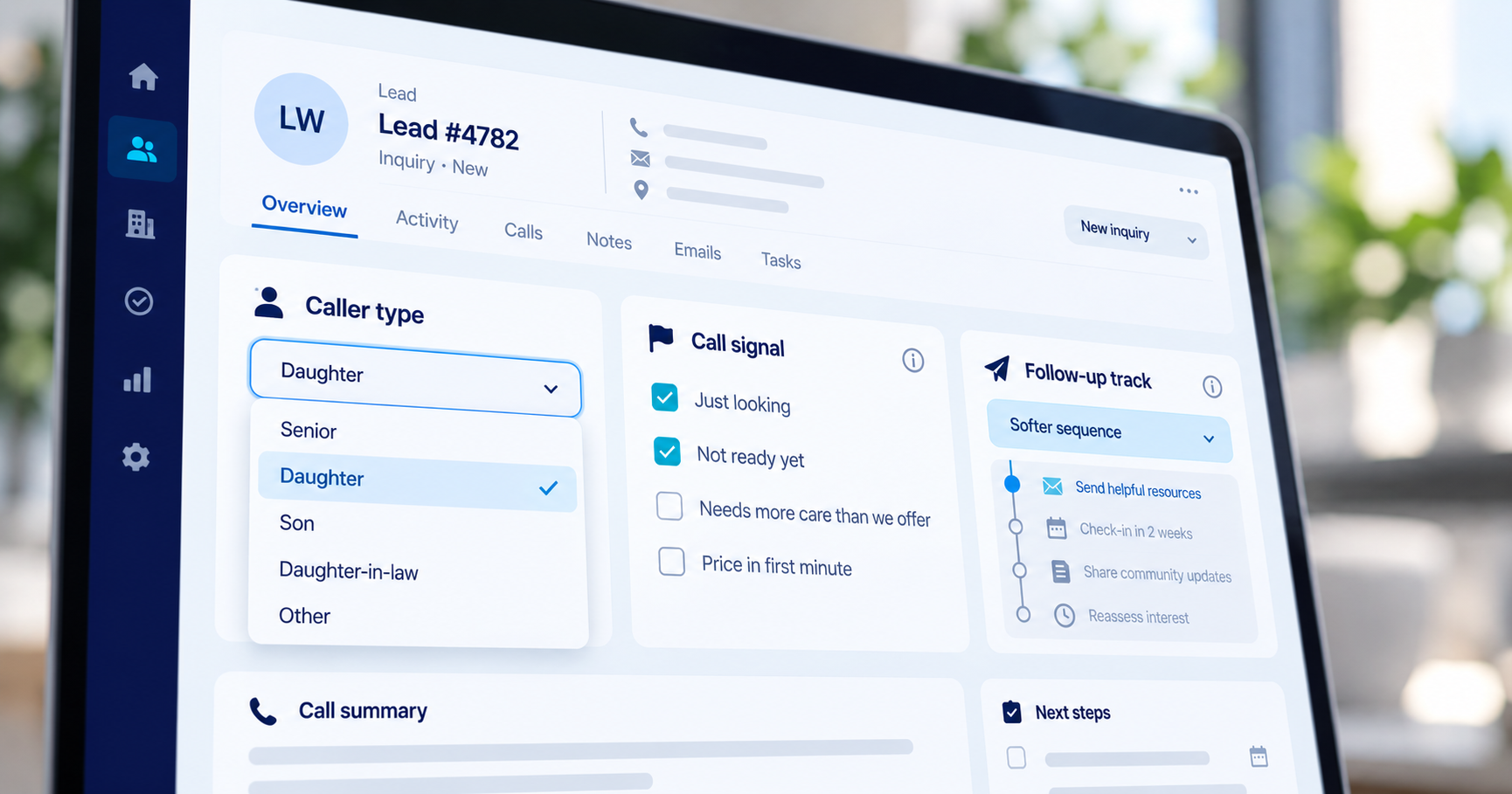
- There’s a structured place in the CRM to record them, like a dropdown or checkbox field on the lead record. A line buried in free-text notes doesn’t count, because data typed differently by dozens of salespeople can’t be reported on.
- Reps know what they’re listening for, through a short list of phrases and a clear rule for what each one triggers. A rep who doesn’t know “just looking” is a signal will treat it as an objection to overcome.
How to Identify and Act on Negative Call Signals in Senior Living Sales, Step by Step
Step 1: Record Who Is Calling on Every Senior Living Sales Call
The first thing to capture on every senior living sales call is who placed it, whether that’s the prospective resident, a daughter, a son, a daughter-in-law or someone else. In NextWave’s data, daughters place more than twice as many calls as sons, and daughters-in-law have the highest move-in rate of any caller type. Combined with the 9% versus 3.4% gap between daughters and seniors calling for themselves, caller type is one of the easiest signals to capture and one of the most telling.
Step 2: Treat “Just Looking” and “Not Ready Yet” as a Cue to Slow the Senior Living Sales Call Down
When a family says they’re just looking or not ready yet, the rep should slow down and ask less. A family that isn’t ready now could be ready in the future. A rep’s instinct is often to press for a tour, and on these calls that instinct works against the community.
Step 3: Note When a Senior Living Prospect Says They Need More Care Than the Community Offers
A family saying the person needs more care than the community provides belongs on the same list of lower-likelihood signals. Sometimes it’s a real fit problem, and sometimes it’s the family’s way of closing the conversation. Record it as its own field so you can see over time how often it comes up and what happens to those leads later.
Step 4: Steer Price-First Senior Living Calls Toward Care Needs
When a caller opens with price, a senior living rep doesn’t have to refuse it. The rep can change the order. NextWave reps answer an early price request with a line like this one. “Yes, we’ll get to that, but first let me understand more about the care needs of the potential resident, and then we can talk about pricing.” In NextWave’s data, when reps steered calls to care needs first and talked price two or three minutes in, the tour booking rate roughly doubled.
Step 5: Move Senior Living Leads With Negative Signals to a Softer Follow-Up Track
A senior living lead with a negative signal still needs follow-up, just a different kind. Enroll these families in a softer follow-up sequence, with lighter touches spread further apart, instead of the push-for-a-tour cadence used for families who are ready now. Tag the signal on the lead record so the right sequence starts automatically.
Common Mistakes Senior Living Sales Teams Make With Negative Call Signals
Pushing for the tour anyway is the most expensive mistake. A family pushed too hard on that first call may remember feeling uncomfortable and feeling that the rep asked too much before they were ready. When that family comes back to the market later, it may choose a community that gave them room.
Writing the lead off is the second. A 3.4% move-in rate for seniors calling about themselves is low, but it isn’t zero. A family that says “not ready” today can be ready after a fall or a hospital stay six months from now.
Some teams blame the rep for every lost call. NextWave’s data suggests life circumstances drive more of the outcome than sales skill does. Judge reps on how well they recognized the situation and used their time, and drop the expectation that every price-shopping call becomes a tour.
The last mistake is logging signals only in free-text notes. If “just looking” lives in a notes field, nobody can report on it, and the lead can’t be routed to the right follow-up track.
Real Example: How NextWave Reps Handle a “Just Looking” Senior Living Sales Call
NextWave’s reps follow the process above on calls for senior living communities. When a family says they’re just looking or not ready, the rep slows the conversation down, keeps the questions light, and makes sure the family leaves the call comfortable. The lead is then enrolled in a softer follow-up sequence instead of the standard tour-focused cadence.
When a caller is clearly cost shopping in the first seconds of the call, the rep still gives them the information they came for, then moves on efficiently to the next call. The goal is to give every family the same level of service while spending the most time where a move-in is most likely.
Frequently Asked Questions
What does it mean when a senior living prospect says they are “just looking”?
When a senior living prospect says they’re “just looking,” NextWave’s call data links it to a lower chance of a near-term move-in, along with “not ready yet” and needing more care than the community offers. The phrase is often a family getting ahead of an uncomfortable conversation and signaling they don’t want to be pushed. The right response is to slow down, keep the questions light and move the lead to a softer follow-up sequence.
Are senior living leads less likely to move in when the senior calls for themselves?
Senior living leads are less likely to move in when the senior calls for themselves. In NextWave’s call data, families moved in 3.4% of the time when the senior called, compared with about 9% when a daughter called. Seniors calling for themselves are often still gathering information and hoping to put off the move, so those leads still deserve follow-up on a gentler timeline.
Should senior living sales reps give pricing at the start of a call?
Senior living sales reps can acknowledge a pricing question right away but hold the numbers until they understand the resident’s care needs. In NextWave’s call data, tour booking was much less likely when price came up in the first minute. Steering to care needs first, then discussing price two or three minutes in, roughly doubled the tour booking rate.
Should a senior living lead who says “not ready yet” be marked unqualified?
A senior living lead who says “not ready yet” shouldn’t be thrown out. The lead should be tagged with that reason and moved to a softer follow-up track. Families who aren’t ready today often become ready after a change in health or living situation, and recording the reason as a structured CRM field lets you report on how many of those leads move in later.
Bob Torchetti, VP of Client Management, NextWave
Want to know what your own sales calls are saying about which families are ready? Book a call with the NextWave team. It’s a conversation, not a pitch.